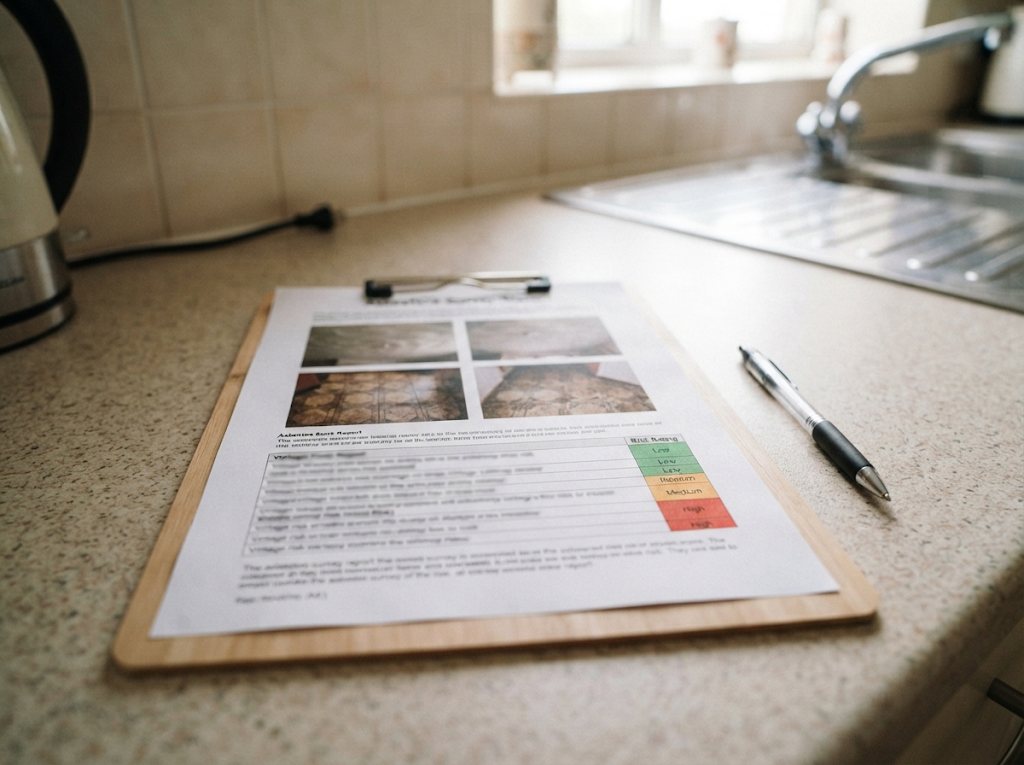
Most business owners in Warrington have heard of the duty to manage asbestos, but far fewer know what it actually asks of them. The short version: if you own, lease or are responsible for maintaining a non-domestic building built before 2000, you are expected to find out whether it contains asbestos, keep a record of where it is, and make sure nobody disturbs it without knowing.
Who is the duty holder?
Regulation 4 of the Control of Asbestos Regulations 2012 places the duty on whoever has responsibility for maintenance and repair of the premises. In a freehold building that is usually the owner. In a leased unit it depends on the lease: sometimes the landlord, sometimes the tenant, often both for different parts of the building. For flats and HMOs, the duty covers the common parts — stairwells, plant rooms, roof spaces and bin stores.
If the lease is unclear, the practical answer is the same: someone needs a survey and an asbestos register, and everyone involved should be able to see it.
What you actually need
The starting point is an asbestos management survey carried out to HSE guidance HSG264. A surveyor inspects every accessible area in normal use, samples suspect materials and sends them for laboratory analysis. The result is a register: a list of each material, where it is, what condition it is in and how likely it is to be disturbed.
From the register you write a management plan. For most Warrington offices, shops and units this is a short document: who is responsible, what each item needs (leave, monitor, encapsulate or remove), and how contractors are told before they start work.
Keeping it current
A register is only useful if it is up to date. Materials left in place should be re-inspected at regular intervals — typically every six to twelve months, depending on condition and risk — and the register updated after any removal or building work. Before refurbishment, the areas affected also need a refurbishment and demolition survey, which is more intrusive than a management survey.
Where Warrington buildings usually have it
Older units on the town's industrial estates commonly have cement roof sheets and wall cladding. Offices and schools refitted before 2000 often have textured ceilings, ceiling tiles, floor tiles and boards around heaters or risers. Plant rooms may still have lagging on pipework. None of these is automatically a problem, but all of them need to be identified and recorded.
Related: Commercial asbestos management survey · Asbestos re-inspection