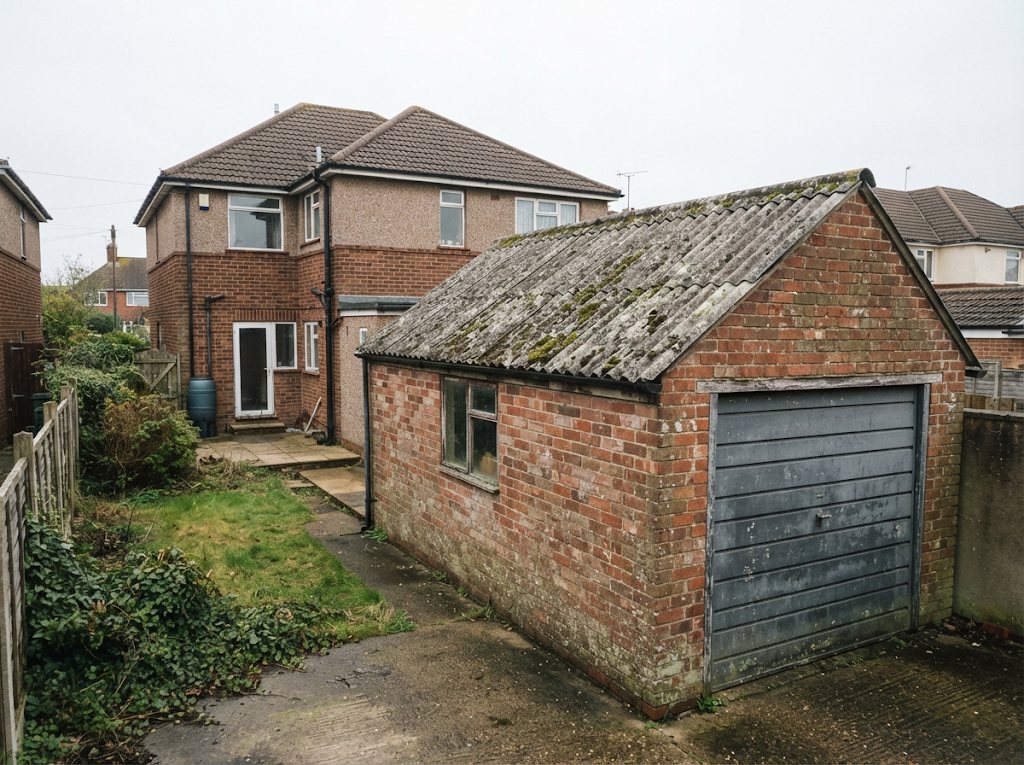
Walk round almost any older industrial estate in Warrington and you will see grey corrugated roofs and cladding on units built between the 1950s and the 1980s. Many of these sheets contain asbestos cement. In good condition they are low risk; the question for owners and tenants is what to do when they start to leak, crack or come up for renewal.
First, confirm what it is
Not every corrugated sheet contains asbestos, and guessing either way is expensive. A sample analysed by an accredited laboratory settles it. Where the roof is part of a wider building, it should already be on the asbestos register; if it is not, the register needs updating.
The three usual options
Leaving and monitoring works where sheets are sound and not leaking — the register records their condition and they are re-inspected periodically. Overcladding fixes a new roof over the old sheets, which avoids disturbing them but adds weight and needs the structure checking. Removal and replacement deals with the issue permanently and is often the choice before a sale, a re-let or a change of use.
Working safely
Cement sheets must never be jet-washed, power-cut or broken up casually. Removal is usually carried out as non-licensed work by trained operatives following the correct controls, but condition, quantity and access all affect the approach. Roof work also brings fall-from-height risks, particularly with fragile sheets and roof lights.
Before you get quotes
A survey gives every contractor the same information to quote from: what the material is, how much there is and what condition it is in. That makes quotes comparable and avoids paying for work that is not needed.
Related: Industrial & warehouse survey · Commercial management survey